What if you could live in one of Los Angeles’ most recognizable waterfront pockets, yet still feel tucked away from the city’s busier rhythm? That is part of what draws people to the Venice Canals. If you are wondering whether canal-side living feels charming, practical, private, or simply unique, this guide will walk you through the day-to-day experience and what makes this historic district stand apart. Let’s dive in.
A Distinctive Pocket of Venice
The Venice Canals are a small historic residential district in Venice, just a few blocks from Venice Beach and east of the boardwalk and the Pacific Ocean. The area is listed on the City of Los Angeles Historic Places Register and the National Register of Historic Places, and the canal system was also named a Los Angeles Historic-Cultural Monument in 1983.
That historic status shapes how the neighborhood feels today. The current landscape reflects the City’s 1991 to 1993 restoration, which rebuilt sidewalks and retaining walls after earlier decline. As a result, the canals feel preserved, walkable, and visually distinct from the surrounding street grid.
The Layout Feels Intimate
One of the first things you notice about the Venice Canals is how contained they feel. The district includes six canals that stretch about 1.5 miles, are roughly 50 feet wide, and are crossed by nine footbridges.
Vehicle access is limited, with a one-way entrance at Dell Avenue and Sherman Canal. That design gives the neighborhood a quieter, more enclosed feel than many nearby Venice streets. Instead of blocks built around car traffic, the canals center daily life around sidewalks, bridges, and water views.
Daily Life Is Centered Outdoors
If you enjoy walking and spending time outside, the canals support that lifestyle naturally. Walk Score lists Venice at 83 for walking, 52 for transit, and 88 for biking, noting that most errands can be accomplished on foot.
Within the canal district itself, the pace is slower. Sidewalks are narrow, bikes should be walked, and even a relaxed stroll across a few bridges can take at least 45 minutes. In practical terms, living here often means your routine includes morning walks, evening loops, and frequent time spent outdoors close to home.
Expect a Walking Neighborhood
The canals are not set up like a typical suburban neighborhood with wide streets and a garage-to-destination lifestyle. Instead, you move through the area on foot, crossing bridges and following narrow paths beside the water.
For many buyers, that is part of the appeal. The neighborhood encourages a slower cadence and a stronger connection to the setting. It can feel more like a waterfront retreat than a standard Los Angeles residential block.
Beach Access Is Part of the Appeal
The canals are closely tied to the beach lifestyle that defines this part of the Westside. Public access lands on 25th Avenue between the canals and Venice Beach reinforce that connection between residential living and the outdoor coastal corridor nearby.
That means you are not choosing between a quiet residential setting and coastal access. In many ways, the appeal of the canals is that you can have both within a compact footprint.
Architecture Is Varied and Character-Driven
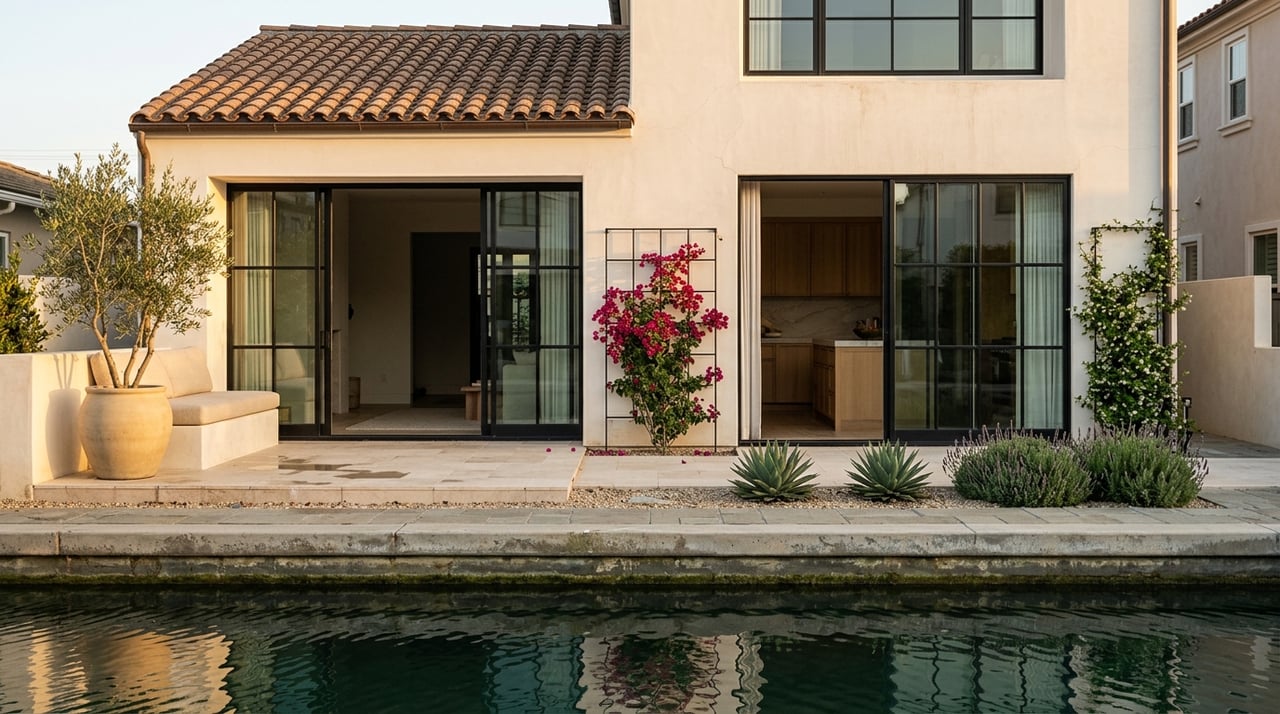
There is no single architectural look along the Venice Canals. According to the Venice Canals Association, the area includes Venetian villas, Spanish casitas, rambling beach houses, ultramodern glass structures, and some original one-story bungalows from the early 1900s.
That mix gives the neighborhood a layered, design-forward identity. You are not walking through a master-planned community with repeating facades. You are moving through a district where historic character and newer design sit side by side.
Historic Preservation Still Matters
The original canal homes were largely small summer cottages, and preservation policy continues to protect the district’s historic integrity. The Venice Local Coastal Program includes guidelines for rehabilitation, new construction, demolition controls, and use regulation.
For homeowners and buyers, that matters. It helps preserve the visual identity of the canals and supports the sense that this is a special part of Venice with a defined character, not just another residential area near the beach.
The Neighborhood Has a Shared Stewardship Feel
One practical detail that surprises some buyers is that the Venice Canal Association is not a traditional HOA. It is a voluntary membership organization, and canal properties do not have CC&Rs.
That setup suggests a neighborhood culture shaped more by participation and shared stewardship than by a conventional rulebook. In a place this visible and historic, that community-minded approach can be an important part of how the area functions day to day.
Privacy Exists, But It Is Not Seclusion
A common question about the Venice Canals is whether they feel private. The answer is nuanced. The canals are open to visitors year-round and are considered one of the more popular visitor destinations in Los Angeles.
At the same time, this is still a lived-in residential neighborhood. The local association asks visitors to respect resident privacy, which captures the balance well. If you live here, you can expect beauty and foot traffic, but also a strong local understanding that people call this place home.
Community Events Add Personality
The canals host recurring community moments such as Canaloween, a July 4 rubber duck race, and holiday bridge decorations. These traditions add a sense of personality and continuity to the neighborhood.
For residents, that can make the canals feel more connected and memorable than a typical residential pocket. There is a lived-in rhythm here that goes beyond the scenery.
Practical Realities Matter Too
As charming as canal-side living can be, it also comes with practical considerations. Visitor parking is not available within the canals, and parking is generally found on the perimeter or in nearby lots.
That does not mean living here is inconvenient, but it does mean access works differently than in more conventional neighborhoods. If you value easy in-and-out vehicle circulation, this is something to weigh alongside the lifestyle benefits.
Water Conditions Are Managed
The canals are seawater-fed from Ballona Lagoon and the Pacific Ocean. The water level is city-controlled, changes with maintenance and tide conditions, and the canals are drained and refilled routinely.
This is useful context because the water is part of daily life here, but it is also part of an active urban system. Buyers often appreciate understanding that the canals are scenic and historic, yet also maintained infrastructure.
Environmental Exposure Is Part of the Setting
The visitor information for the canals notes that the area may be subject to flooding and other environmental hazards related to sea level rise. For waterfront living, that is an important reality to understand upfront.
This does not take away from the neighborhood’s appeal, but it does reinforce that living near the water comes with trade-offs as well as benefits. A thoughtful home search here should include both lifestyle fit and property-specific due diligence.
How the Canals Compare With Nearby Venice
The canals feel very different from nearby commercial and visitor-oriented corridors. The Venice Community Plan describes Abbot Kinney Boulevard north of Venice Boulevard as a pedestrian-oriented area with retail shops, restaurants, and art galleries.
It also identifies Windward Circle as a historic pedestrian-oriented area with retail, restaurants, a hotel, a bank, a post office, and a medical clinic. Rose Avenue includes mixed-use activity, Ocean Front Walk is a major tourist attraction, and Lincoln Boulevard functions as a broader commercial corridor.
Calm at Home, Activity Nearby
This contrast is part of what makes the canals so compelling. You can live in a quieter residential pocket defined by water, bridges, and neighborhood-scale movement, while still being close to restaurants, galleries, beach activity, and everyday services.
For many buyers, that balance is the real luxury. The canals do not feel remote, but they also do not feel like they move at the same pace as the busier parts of Venice.
Who Tends to Love Living Here
The Venice Canals often appeal to people who care deeply about setting and lifestyle. If you value architectural variety, walkability, outdoor living, and a neighborhood that feels unlike anywhere else in Los Angeles, the canals offer a rare combination.
They can also appeal to buyers who want a home with a strong sense of place. This is not a generic beach-adjacent address. It is a highly specific residential environment with historic identity, visual character, and a day-to-day rhythm that feels different from the surrounding city.
Final Thoughts on Canal Living
Living along the Venice Canals is less about checking a standard list of neighborhood features and more about how you want your daily life to feel. The setting is compact, scenic, historic, and closely connected to the beach, with a rhythm shaped by walking, bridges, water, and community stewardship.
At the same time, it comes with real-world considerations like visitor presence, access constraints, parking logistics, and environmental exposure. If that balance fits your lifestyle, the canals can offer one of the most distinctive residential experiences on the Westside.
If you are considering a home in Venice and want thoughtful guidance on how the canals compare with nearby streets and properties, Azure Hynes can help you evaluate the lifestyle, design, and long-term fit with clarity and care.
FAQs
Is the Venice Canals neighborhood private or open to the public?
- The Venice Canals are open to visitors year-round, but they are also a residential neighborhood where privacy and respectful etiquette matter.
Is it easy to walk or bike in the Venice Canals?
- Yes, the area is very walkable, but the sidewalks are narrow and bikes should be walked within the canals.
Is there an HOA in the Venice Canals?
- No, there is not a traditional HOA. The Venice Canal Association is voluntary, and canal properties do not have CC&Rs.
What kind of homes are in the Venice Canals?
- The neighborhood includes a mix of Venetian villas, Spanish casitas, beach houses, ultramodern glass homes, and some early 1900s one-story bungalows.
How do the Venice Canals compare with nearby Venice streets?
- The canals are generally a quieter residential pocket, while nearby areas like Abbot Kinney Boulevard, Windward Circle, Rose Avenue, Ocean Front Walk, and Lincoln Boulevard are more active, commercial, mixed-use, or visitor-oriented.
Are there practical downsides to living in the Venice Canals?
- Some practical factors include limited vehicle access, parking constraints, visitor foot traffic, and potential flooding or other environmental hazards tied to waterfront living.