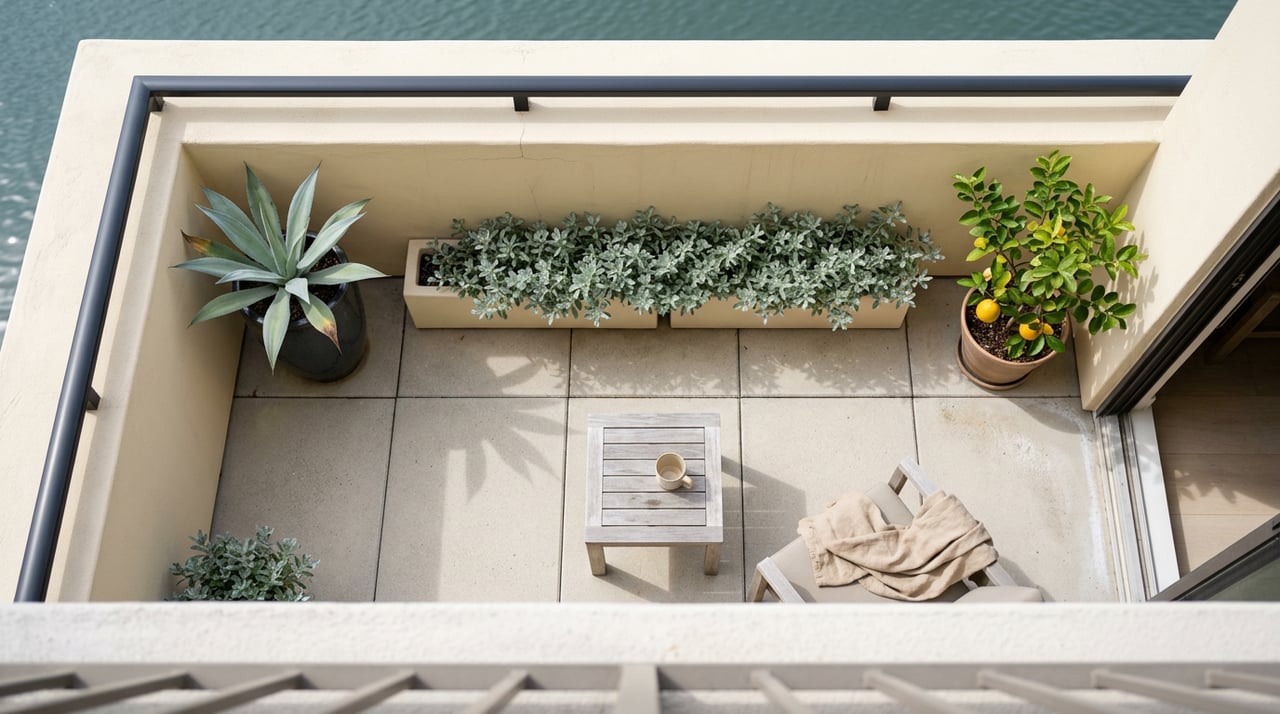
A buyer touring Marina City Club last spring fell for the unit before she finished the walkthrough. Floor-to-ceiling glass over the harbor, a private balcony catching the evening light off the water, the kind of view that makes a decision feel easy. It stopped being easy three weeks later, when her title report came back with language her fee-simple friends in Venice had never seen: subleasehold interest. Her lender needed the full ground lease before it would touch the file. Her thirty-year mortgage now had to answer to a document that expires in 2067.
She isn't buying a condo, not in the way the word usually means it. She's buying the right to occupy one for the years remaining on a lease that Los Angeles County holds over the land beneath her building. That distinction, buried in escrow paperwork rather than in any listing photo, is the thing most buyers comparing Marina del Rey against Venice, Playa Vista, or the South Bay never see coming. And it is currently in motion in ways that will shape what the marina looks like, and what it costs to own there, for the next several decades.
The one building where "condo" is a legal shorthand
Most of Marina del Rey's residential land is owned outright by Los Angeles County, not by the people who live on it. The county's Department of Beaches and Harbors leases parcels to private operators, and for decades nearly all of that residential leasehold product has been built and run as rental apartments. Marina City Club is the exception. Its lease, which began in November 1986 and runs to July 29, 2067, is the only ground lease in the marina that permits condominium-style ownership alongside its apartment units.
The word "condo" gets used loosely there, including in the county's own paperwork, but the legal structure underneath it is different. Marina City Club's 600 residential units are not condominiums under California's Subdivision Map Act. Each owner holds a prepaid subleasehold interest, a right to occupy their unit for the remaining term of the master lease, rather than fee title to a unit and a share of common areas. It is a distinction that rarely comes up at an open house and almost always comes up with a lender.
That structure allows apartment buildings to be converted to for-sale product without the county giving up its underlying revenue stream. It also created a category of ownership that behaves less like a traditional condo and more like a very long, very expensive lease with a mortgage attached to it.
The formula behind your monthly rent, and why it moved
Owners at Marina City Club don't pay a flat ground rent. They pay a percentage of what the county calls the Assigned Rent Basis, a figure designed to approximate what the units would generate if they had stayed apartments instead of converting to ownership. That percentage isn't fixed for the life of the lease. It gets renegotiated, and in 2024 it did.
Under an amendment the Los Angeles County Board of Supervisors approved that February, the percentage rent for Marina City Club's condo units rose from 12.5 percent to 14.5 percent of the Assigned Rent Basis, effective January 1, 2024. On a 2024 Assigned Rent Basis of $31,966,200, that put the year's Annual Rent at $4,635,099, of which $1,678,190 was earmarked as a Rent Credit and routed into the property's repair fund rather than paid out to the county in cash. The remaining $2,956,909 went to the county as actual rent, collected from unit owners through the Condo Owners Association and passed up to the leaseholder, which remains on the hook for the full amount even if the association falls short of collecting it.
That last clause matters more than the percentage itself. If the association ever struggles to collect from delinquent owners, the leaseholder still owes the county in full, which means the remaining owners can be asked to cover the gap. It is a structural reason HOA financial health at Marina City Club deserves the same scrutiny as the view.
The county's last major lease decision
The instinct is to assume the county would rather let a lease lapse and reclaim a fully built, fully occupied property outright. The Villa Venetia lease offers a useful comparison of the financial figures involved when a major lease is extended.
According to Behind the Deals, the 224-unit Villa Venetia apartment complex on Fiji Way was set to revert fully to county possession in May 2021, a building the county could then have owned and operated for an estimated $100 million in value. Instead, the county extended the existing lease years ahead of that date, agreeing to roughly $1.25 million a year in rent through 2054, an annuity worth an estimated $40 to $50 million in present value. The estimated present value of the rent was $40 to $50 million, compared with the building's estimated $100 million value.
Those estimates compare the property's estimated value with the rent's estimated present value, but they don't establish why the county chose to extend the lease. More broadly, a property's remaining lease term can be one factor in decisions about reinvestment in aging leasehold properties. Fisherman's Village has been the subject of repeated redevelopment proposals.
The next 26 leases are already in motion
More lease decisions are coming, at scale. According to Mar Vista Voice, twenty-six county-owned waterfront leases in Marina del Rey are set to expire over the next seven years, and the county has launched a planning process called Marina del Rey for All: The Next Wave specifically to decide what happens to that land next. The county has said it plans to produce a development toolkit to guide those negotiations, and it has already issued a request for proposals for the marina's first 100 percent affordable housing project on one of the affected parcels. Fisherman's Village and other high-visibility sites near Admiralty Way are among the parcels expected to draw new redevelopment proposals as their leases come up.
For a buyer today, this isn't background noise. It means the mix of restaurants, marinas, apartment stock, and public space that defines daily life in Marina del Rey is genuinely up for renegotiation over the next few years, parcel by parcel, in ways that could add housing, add public access, or simply hand the same uses to new operators under new terms. It also means anyone evaluating a leasehold purchase anywhere in the marina, not just at Marina City Club, should ask which lease governs their specific parcel and where that lease sits on the county's list.
What this actually changes about comparing Marina del Rey to the rest of the coast
None of this makes Marina del Rey a bad place to buy. It makes it a place where the ownership structure itself is a variable you have to price, the same way you'd price a remodel timeline or a school boundary. A leasehold unit at Marina City Club can list below a comparable fee-simple property elsewhere on the Westside, and that gap is doing real work: it's compensating for a narrower lender pool, a finite ownership horizon, and a rent obligation that has already moved once this decade.
If you're weighing that trade against fee-simple product in Venice or Playa Vista, the questions worth asking before you write an offer are specific ones. What is the remaining lease term, and does it clear your lender's minimum, since many conventional loans sold to Fannie Mae require the ground lease to extend well beyond the mortgage's maturity. What was the most recent percentage rent reset, and when is the next one scheduled. Does the Condo Owners Association have healthy reserves, given that a shortfall there becomes every owner's problem under the lease's full-payment clause. And where does the parcel sit relative to the county's Next Wave timeline, since a lease coming up for renegotiation in year three of your ownership is a different proposition than one running fifteen years past your expected hold period.
Those aren't questions a listing photo answers, and they aren't questions most buyers think to ask until a title report or a lender surfaces them mid-escrow, the way it happened for the buyer at Marina City Club. Getting ahead of them, before you're under contract, is the difference between a smart discount and an unpleasant surprise. If you want to walk through what fee-simple and leasehold ownership actually mean for a specific building or parcel you're considering, whether in Marina del Rey or a fee-simple alternative nearby, that's a conversation worth having early.
Quick answers
Is every property in Marina del Rey a ground lease? No. Much of the marina's residential land is county-owned and leased, but ownership structures vary by parcel and building. Confirm fee simple versus leasehold status through your title report for any specific address.
Can leasehold units at Marina City Club be financed conventionally? Often yes, but lenders scrutinize the remaining lease term closely, and loans sold to Fannie Mae generally require the lease to run well beyond the loan's maturity date.
Will the county's Next Wave planning process affect resale value? It could, since redevelopment decisions on nearby parcels can change use, density, and public access over the next several years. Buyers with a long hold horizon should track the initiative's progress for parcels near their property.
If you're comparing what a Marina del Rey address actually gets you against fee-simple options elsewhere on the coast, Azure Hynes can walk you through the lease, the numbers, and what they mean for your specific situation. Let's Connect.
This article is general information, not legal, tax or financial advice. Consult a qualified professional about your situation.